About the author
Clark Jones, PhD
Clark Jones, PhD is a pharmaceutical scientist and medical writer with expertise in molecular biology, oncology, and chemistry. He has worked in the fields of oncology research, regenerative medicine, and pharmaceutical quality control, and holds extensive experience with peptide formulations and development in research. In his work, he translates complex scientific literature into evidence-based content while maintaining regulatory and scientific integrity. Every article he writes for Velora Research is grounded in primary sources and framed for a research audience.
Areas of expertise
- Molecular biology
- Oncology research
- Chemistry
- Regenerative medicine
- Pharmaceutical quality control
- Peptide formulation & development
Read articles by Clark Jones
September 8, 2026
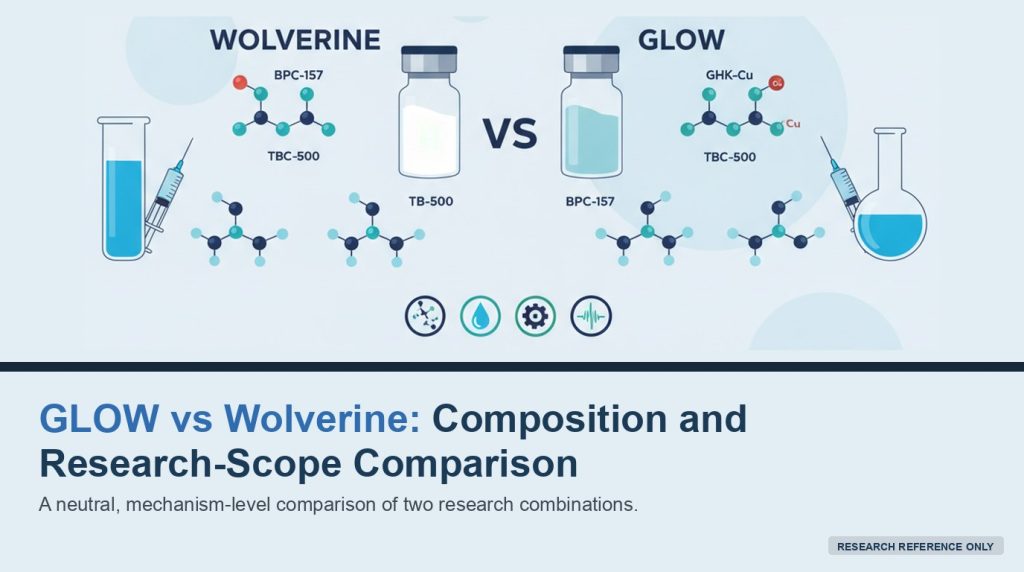
GLOW vs Wolverine Blend: Composition and Research-Scope Comparison
Quick answer: The Wolverine Blend and GLOW are two research combinations that share a core and then diverge. Both contain BPC-157 and TB-500. GLOW adds a third component, the copper tripeptide GHK-Cu, and contains a substantially larger total mass: 70 mg versus 10 mg in the Wolverine Blend, with each formulation maintaining its own fixed Continue Reading
September 8, 2026
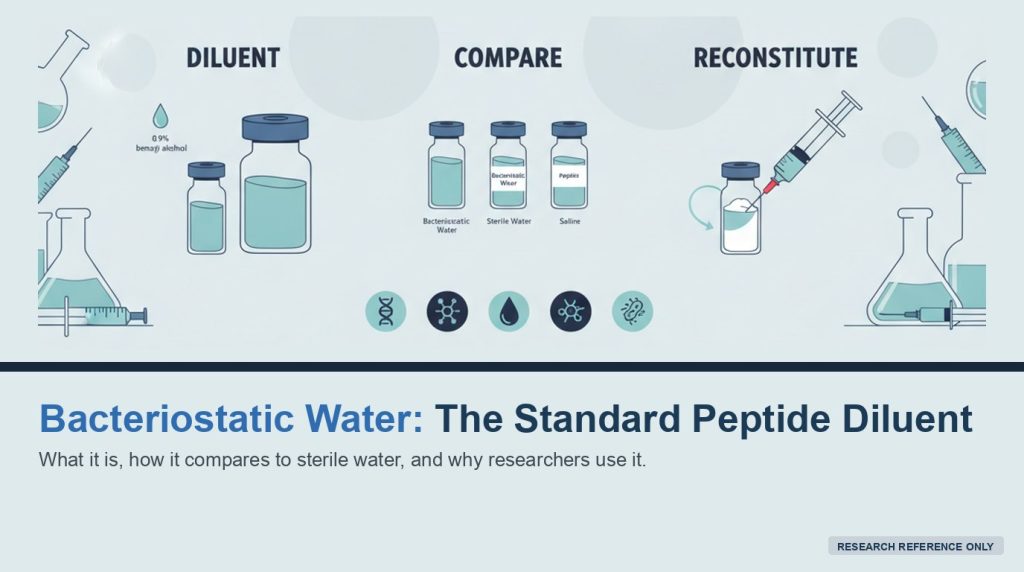
Bacteriostatic Water for Peptides: What It Is and Why Researchers Use It
Quick answer: Bacteriostatic water is sterile water with 0.9% benzyl alcohol added as a preservative. That preservative inhibits microbial growth in the vial after each needle puncture, which is what lets a researcher draw from the same vial repeatedly rather than discarding it after one use. It is a common diluent for reconstituting lyophilized research Continue Reading
August 13, 2026
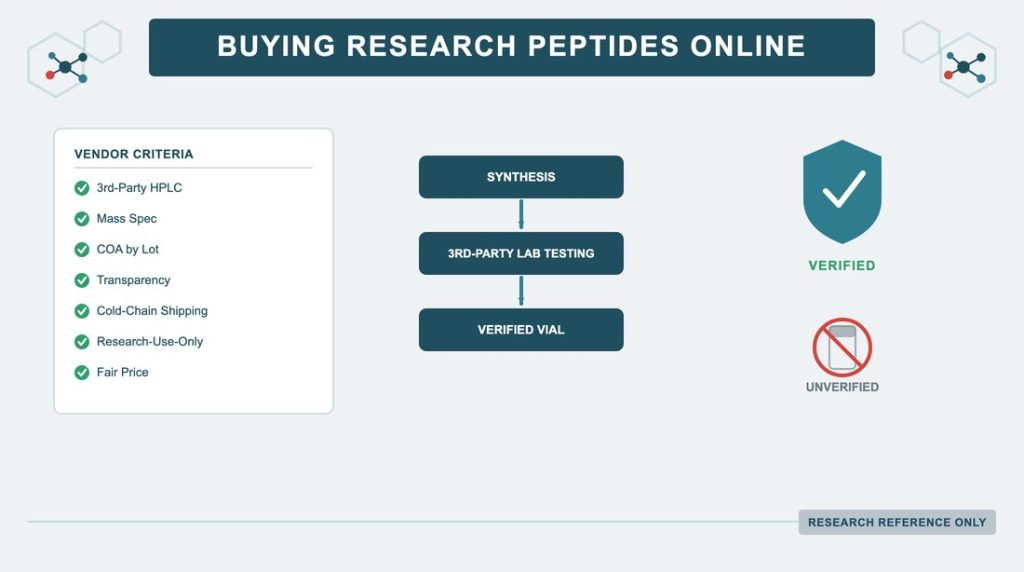
Buying Research Peptides Online: 7 Vendor Criteria and a Vetting Checklist
Quick answer: When you buy research peptides online, the vendor’s analytical rigor matters more than the price. Look for third-party HPLC and mass-spec testing on every batch, Certificates of Analysis you can access by lot number, transparent testing and compliance language, and reasonable pricing that reflects verification rather than a race to the bottom. The Continue Reading
August 4, 2026
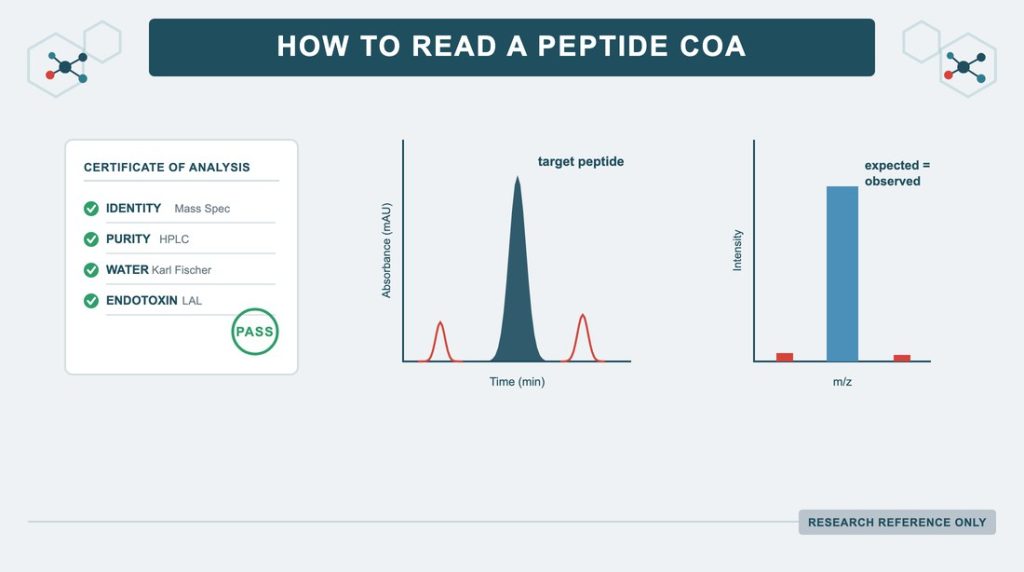
How to Read a Peptide Certificate of Analysis: A Researcher’s Guide
Quick answer: A Certificate of Analysis (COA) is the document that tells you what is actually in the vial. A high-quality research COA ideally confirms: identity by mass spectrometry, purity by HPLC, water content by Karl Fischer, and low bacterial endotoxin by LAL. It should be tied to a specific batch number and produced by Continue Reading
July 28, 2026
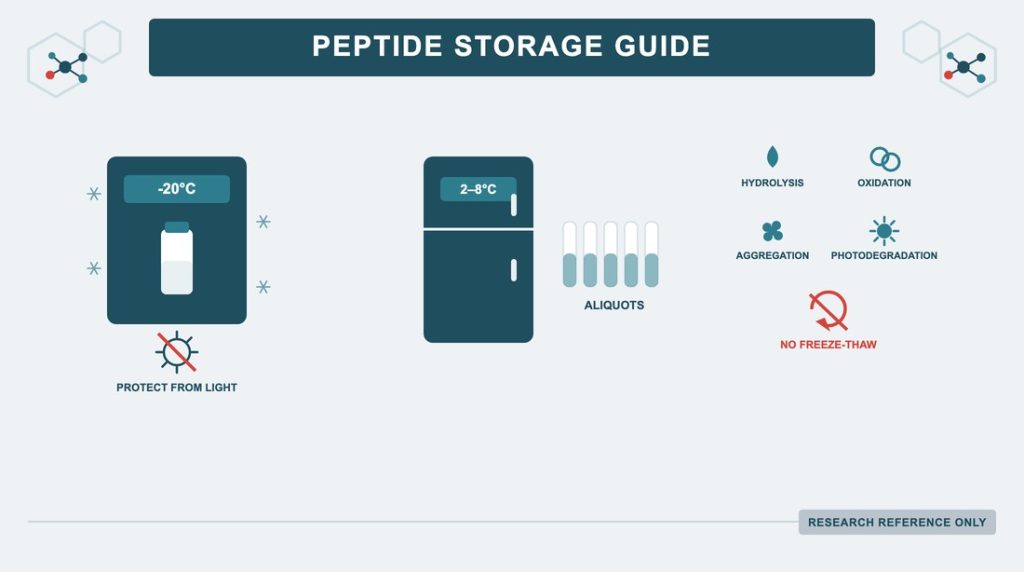
Peptide Storage Guide Temperature, Light, and Stability for Research Compounds
Quick answer: Store lyophilized peptides sealed at -20°C, protected from light. Once reconstituted, keep the working stock at 2 to 8°C, still protected from light, and avoid repeated freeze-thaw cycles by working in single-use aliquots. Some peptide classes have extra sensitivities worth knowing: copper complexes like GHK-Cu are photochemically active, and any peptide’s specific usable Continue Reading
July 21, 2026
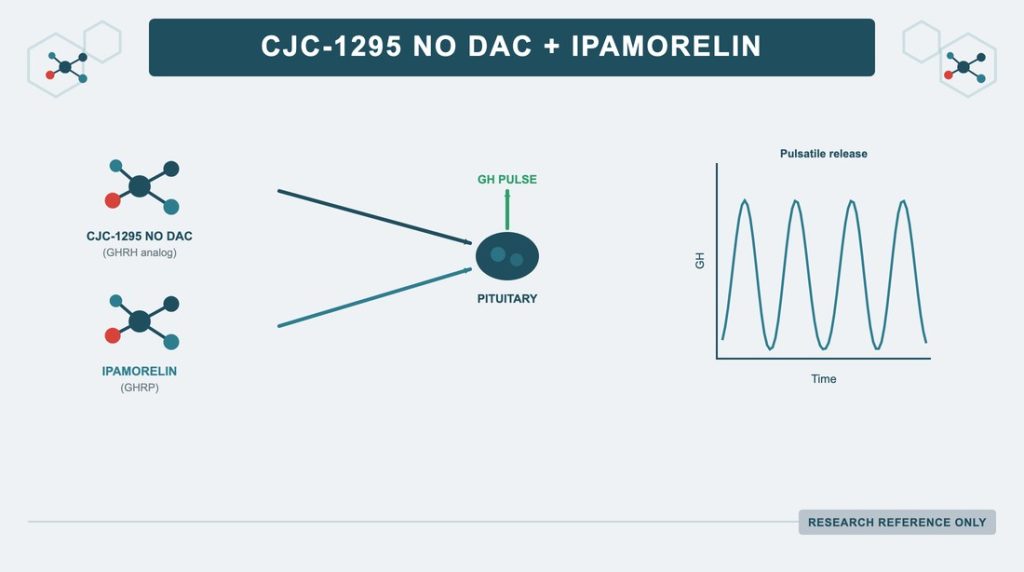
CJC-1295 No DAC + Ipamorelin: Co-Administration Mechanism and Research Reference
Quick answer: CJC-1295 No DAC and ipamorelin are two growth-hormone-axis research peptides that act on different receptors, which is why they are often studied together. CJC-1295 No DAC (also called Modified GRF 1-29) is a stabilized GHRH analog with a relatively short functional half-life of roughly 30 minutes. Ipamorelin is a selective ghrelin-receptor agonist. Neither Continue Reading
July 17, 2026
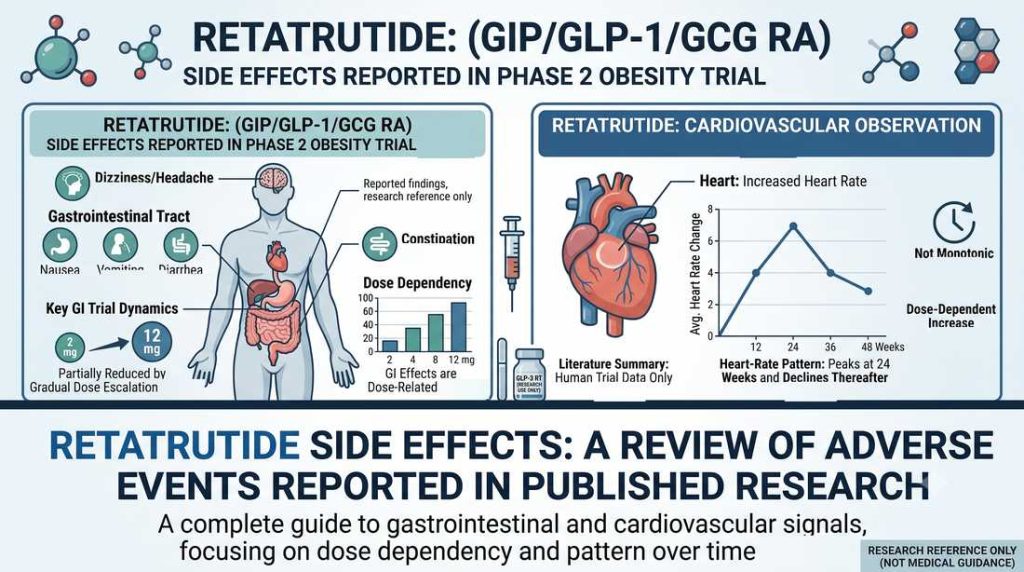
Glp3-Rt Side Effects: A Review of Adverse Events Reported in Published Research
Quick answer: In the published Phase 2 trial of Glp3-Rt, the most common adverse events were gastrointestinal; they were dose-related, they were mostly mild to moderate in severity, and they were partly reduced by starting at a lower dose. The trial also reported dose-dependent increases in heart rate that peaked around 24 weeks and declined Continue Reading
July 15, 2026
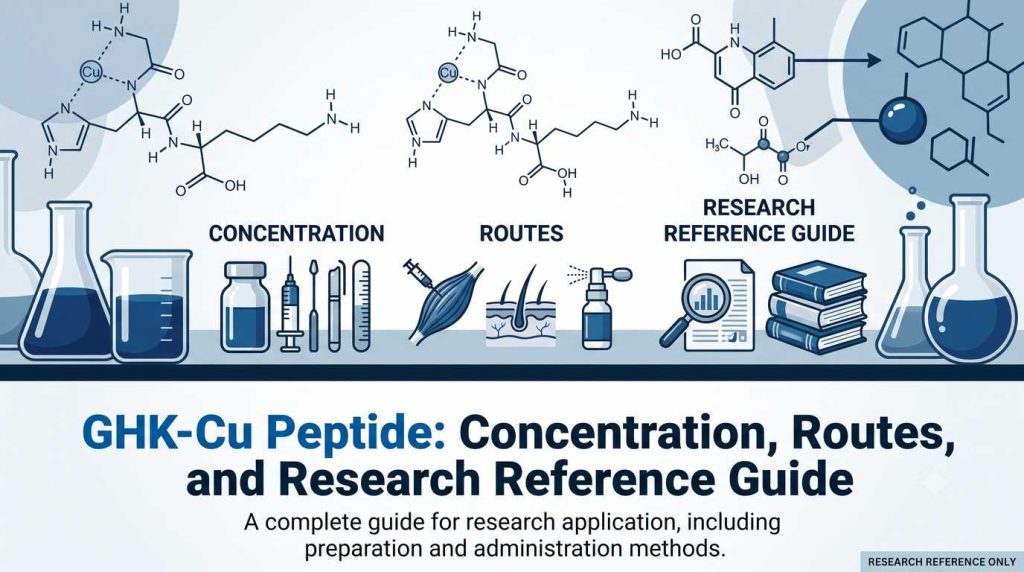
GHK-Cu Peptide: Concentration, Routes, and Research Reference Guide
By Clark Jones, PhD, Velora Research Written and reviewed for scientific accuracy by Clark Jones, PhD ([ORCID 0009-0005-9356-0297](https://orcid.org/0009-0005-9356-0297)). Last reviewed 2026-05-28. Quick answer: GHK is a short tripeptide that forms a high-affinity complex with copper(II), producing the GHK-Cu complex most commonly investigate in research. In the lab it ships as a blue-tinted lyophilized powder, and Continue Reading
July 15, 2026
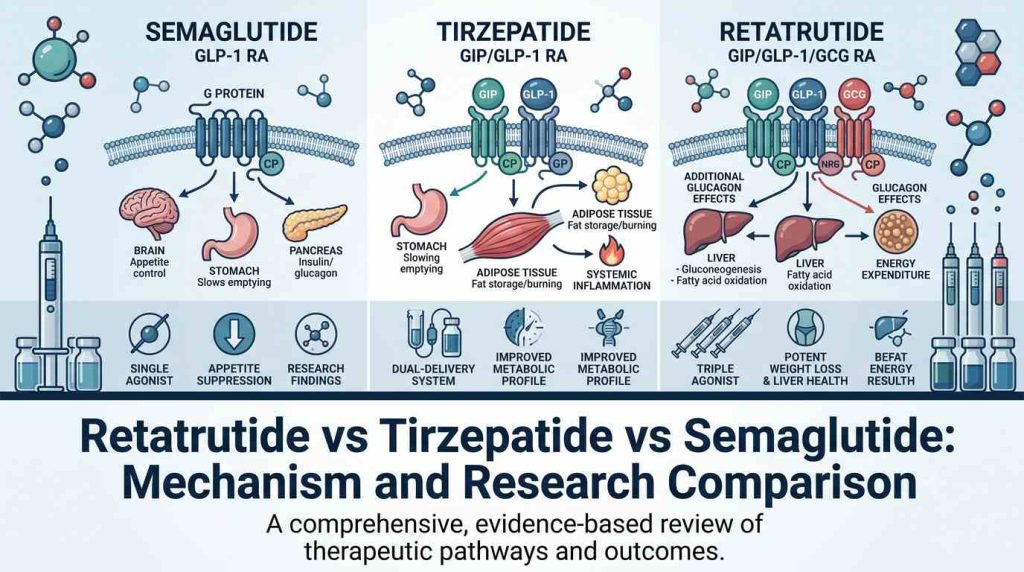
Glp3-Rt vs Tirzepatide vs Semaglutide: Mechanism and Research Comparison
By Clark Jones, PhD, Velora Research Written and reviewed for scientific accuracy by Clark Jones, PhD ([ORCID 0009-0005-9356-0297](https://orcid.org/0009-0005-9356-0297)). Last reviewed 2026-05-28. Quick answer: Semaglutide, tirzepatide, and Glp3-Rt are three peptides that look related on a slide yet differ substantially in the receptors they activate. The simplest way to keep them straight is by counting receptors: Continue Reading
July 15, 2026
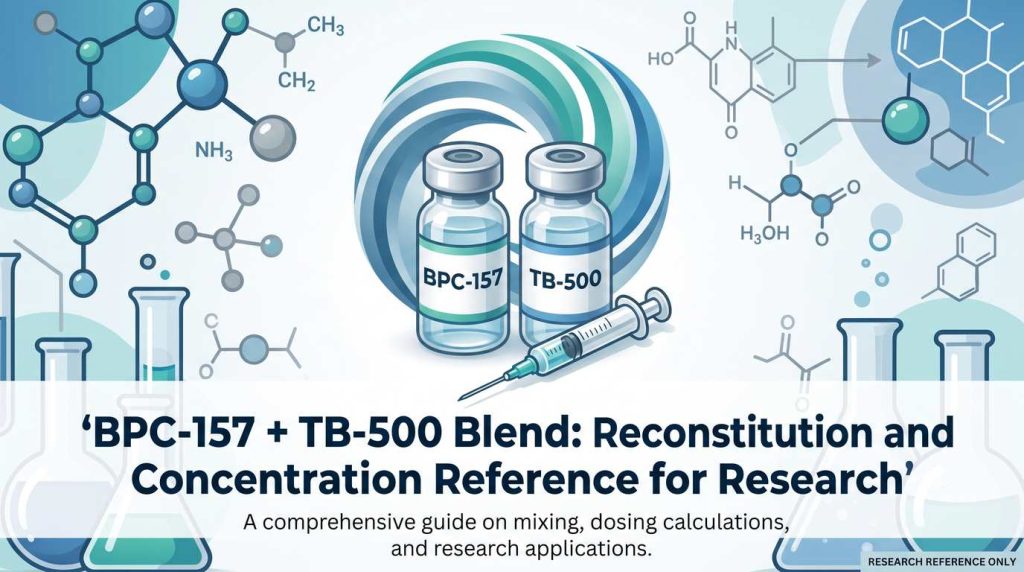
BPC-157 + TB-500 Blend: Reconstitution and Concentration Reference for Research
By Clark Jones, PhD, Velora Research Written and reviewed for scientific accuracy by Clark Jones, PhD ([ORCID 0009-0005-9356-0297](https://orcid.org/0009-0005-9356-0297)). Last reviewed 2026-05-28. Quick answer: BPC-157 and thymosin beta-4 fragment (TB-500) are two short peptides that show up together a lot in preclinical tissue-repair literature, which is why several research vendors supply them as a co-formulated Continue Reading

December 29, 2025
Ensuring Reproducibility in Scientific Research: The Role of Verified Materials
Reproducibility is one of the most important principles in scientific research. For results to be credible, experiments must be repeatable under the same conditions and produce consistent outcomes. While methodology and data analysis are critical, the quality and verification of research materials play an equally important role in achieving reproducible results. In laboratory research, especially Continue Reading

December 29, 2025
Why Third-Party Testing and Certificates of Analysis Matter in Peptide Research
In laboratory research, the reliability of experimental results depends heavily on the quality and consistency of the materials used. When working with research peptides, even small variations in purity or composition can impact data accuracy and reproducibility. This is why third-party testing and Certificates of Analysis (COAs) play a critical role in responsible peptide research. Continue Reading

December 29, 2025
Understanding Research Peptides: Applications, Standards, and Responsible Use
Research peptides play an important role in modern scientific investigation, supporting studies across biology, chemistry, and related laboratory disciplines. As interest in peptide-based research continues to grow, it is essential for laboratories and qualified professionals to understand what research peptides are, how they are used, and why quality standards and responsible handling matter. This article Continue Reading